

25 August 2026
How Defaults Work on Your Credit Report in Australia
Find out when a credit default may be removed in Australia, how long defaults stay on your credit report and what to check if you believe a listing is incorrect.
Kookie Marroun - A OK Credit Repair · Published 25 August 2026 · Last updated 3 September 2026
A default on your credit report can make getting approved for finance more difficult, so one of the first questions many people ask is whether it can simply be removed.
Sometimes it can. Sometimes it cannot.
Paying a default does not automatically make it disappear, and there is no legitimate process that allows every negative credit listing to be deleted. What matters is whether the information has been reported correctly and whether the requirements surrounding the listing were followed.
What is a default on a credit report?
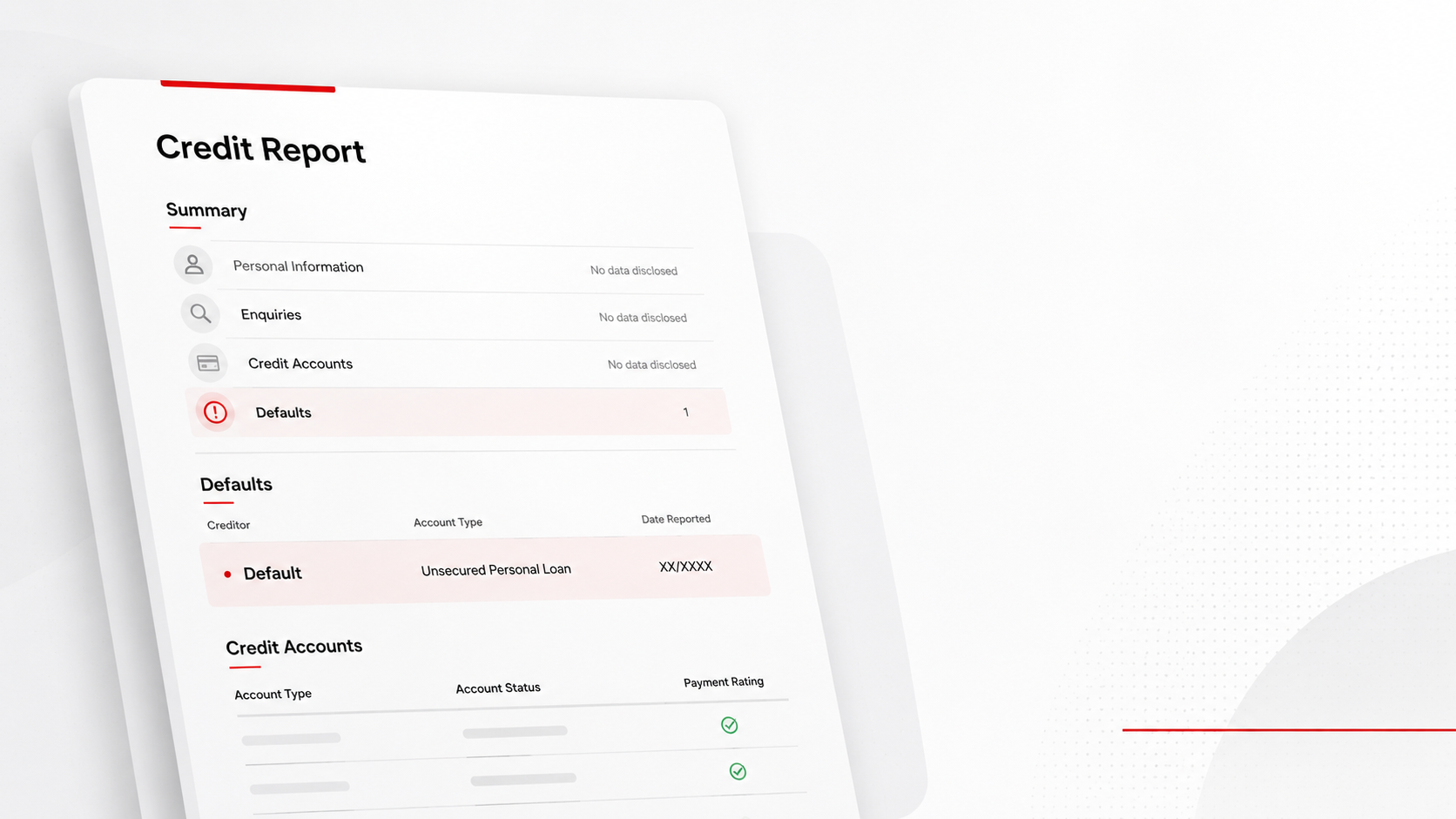
A default is a record of an overdue debt that has met the requirements to be reported to a credit reporting body.
A credit provider cannot generally report a consumer credit default simply because a payment is a few days late.
According to the Office of the Australian Information Commissioner, a default can generally be reported when the payment has been overdue for at least 60 days, the overdue amount is $150 or more, and the required notices have been sent to the consumer.
There are also rules around the timing of those notices and when the information can be reported.
This means there is more to assessing a default than simply confirming that a debt once existed.
Does paying a default remove it?
No.
If a valid default has already been recorded and you later pay the debt, the default will generally remain on your credit report. The record should instead be updated to show that the amount has been paid.
A standard default generally remains on a credit report for five years.
This is worth knowing before paying someone who promises that a default will disappear simply because the outstanding balance has been cleared.
Payment and removal are two separate issues.
When could a default be corrected or removed?
Australian credit reporting information is required to be accurate, current, complete and relevant.
If information on your credit report is incorrect, you have the right to ask for it to be corrected.
There are many reasons a default may deserve a closer look.
For example, the account may not belong to you. The amount or dates may be incorrect. The same debt may appear more than once. Required notices may not have been issued correctly. The information may have remained on the report beyond the permitted period. An account may also be connected to fraud or identity theft.
Another issue can arise when information has not been properly updated after a debt has been paid.
None of these circumstances automatically guarantees that a default will be deleted. They are examples of matters that may need to be investigated before deciding whether a correction request has a reasonable basis.
What if the default is completely accurate?
If the debt belongs to you, the information is accurate and the credit provider complied with the relevant requirements, the fact that the default is making it difficult to obtain finance is not normally enough by itself to have it removed.
That is an important distinction.
Credit repair should not be based on promising that every negative item can disappear. A proper assessment should first look at the history of the account and determine whether there is actually something that warrants correction or dispute.
Sometimes the realistic answer will be that a listing is likely to remain.
What if I asked the lender for financial hardship assistance?
The timing of a financial hardship request can matter.
The OAIC states that a credit provider is generally prevented from listing a default while it is considering a qualifying hardship request. If the request is refused, restrictions also apply for a period after the consumer has been notified of that decision.
There are exceptions and the individual circumstances matter, so the account history should be reviewed carefully.
If you requested hardship assistance before a default appeared, it is worth checking the dates and correspondence rather than assuming the listing must be correct.
How can I check my own default?
Start with your credit report.
Australian consumers are entitled to request a free copy of their consumer credit report every three months.
Once you have the report, look closely at the creditor name, amount, date of the default, payment status and account information.
Make sure the debt is actually yours and check whether the information matches your own records.
It can also be useful to go back through letters, emails and account statements from the period before the default was recorded. The history surrounding the listing can be just as relevant as what appears on the credit report itself.
Can I ask for a correction myself?
Yes.
You do not need to use a credit repair company simply to ask for incorrect credit information to be corrected.
The OAIC recommends contacting the relevant credit provider in the first instance where possible. You can also make a correction request through a credit reporting body.
Australia uses what the OAIC describes as a no wrong door approach. If the organisation receiving the request needs information from another credit provider or credit reporting body, the system allows the organisations involved to work together when considering the correction.
There is no fee simply for exercising your right to seek correction of incorrect credit information.
What happens if my request is rejected?
If a credit provider or credit reporting body does not agree that a correction should be made, that does not necessarily end the complaint process.
Depending on who the complaint relates to, you may be able to take the matter to an appropriate external dispute resolution service such as the Australian Financial Complaints Authority.
The Office of the Australian Information Commissioner also deals with credit reporting privacy issues.
Which avenue is appropriate will depend on the organisation involved and what you are disputing.
So, can my default actually be removed?
The answer depends on the individual listing.
A default should not be challenged simply because it is inconvenient or because you would prefer a higher credit score. There should be a genuine reason to question whether the information has been reported correctly.
At the same time, it is reasonable to investigate a listing rather than assuming everything recorded on a credit report must be accurate.
At A OK Credit Repair, we assess the circumstances surrounding a credit listing before recommending that a client proceed. The aim is to give you a realistic view of the matter rather than promise an outcome before the information has been properly reviewed.
If there does not appear to be a reasonable basis to pursue the result you want, we believe you should know that before committing to a service.
Need help reviewing a default?
If you have a default on your credit report and are unsure whether it has been reported correctly, A OK Credit Repair offers free initial assessments.
You can send through your credit report and the circumstances surrounding the listing for review to info@aokcreditrepair.com.au or call 0433 707 749.
Where can I find independent information?
For independent information about your rights, you can visit the Office of the Australian Information Commissioner and Moneysmart.
Both provide free information about credit reports, defaults, correction rights and obtaining a copy of your credit report.
This article contains general information only. Individual circumstances vary and the information should not be treated as legal or financial advice.
Where to next
If you believe a default on your file may not have been listed correctly, our service page on default removal in Australia explains the grounds we look at, what evidence is needed and how the dispute process runs. For the wider picture, read our complete guide to credit repair in Australia.
Learn about challenging a default on your credit file
Defaults on your credit fileThis article is general information only and does not take your personal circumstances into account.
All articlesGet started
A free, confidential assessment of your credit file.
A OK Credit Repair reviews your file, tells you what we can help with, and gives you an honest plan — before you commit to anything.
No obligation · Strictly confidential